Kimberley 1866–1914
From Eureka to the Big Hole
Introduction
The discovery of diamonds in southern Africa changed the course of history. It transformed Kimberley from open veld into the world's greatest diamond mining centre, attracted thousands of fortune seekers from every continent, created vast fortunes and helped shape modern South Africa.
This timeline follows the key events between the discovery of Africa's first authenticated diamond in 1866 and the closure of the Kimberley Mine at the outbreak of the First World War in 1914.
The Timeline
1866 – Eureka!
Fifteen-year-old Erasmus Jacobs discovers a transparent pebble on his family's farm near Hopetown, close to the Orange River. The stone is later identified as Africa's first authenticated diamond and named the Eureka Diamond. Although modest in size, its discovery marks the beginning of South Africa's diamond industry.
1869 – The Star of South Africa
A Griqua shepherd discovers an 83.5-carat rough diamond near Hopetown. Named the Star of South Africa, the spectacular find captures international attention and triggers the first great diamond rush to the Orange River diggings.
1870 – The Diamond Rush Gathers Pace
Diamonds are discovered at Klip Drift (today Barkly West), sparking a second diamond rush. Later that year, rich deposits are found at Bultfontein and Du Toit's Pan, drawing thousands more prospectors to the district.
Among the new arrivals is a 17-year-old Englishman named Cecil John Rhodes, who begins his Kimberley career by selling ice to miners before investing his savings in diamond claims.
1871 – Kimberley is Born
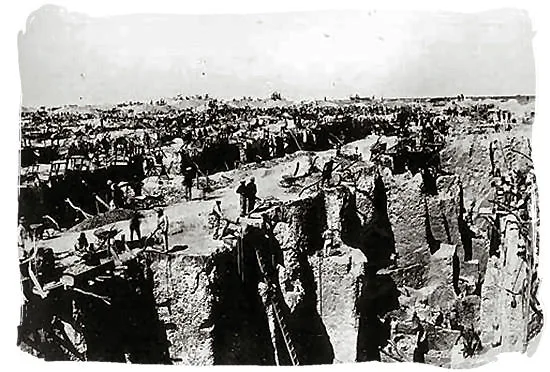
The De Beers Mine is discovered in May, followed by the even richer Kimberley Mine in July. A sprawling tent settlement known as New Rush quickly develops around the diggings.
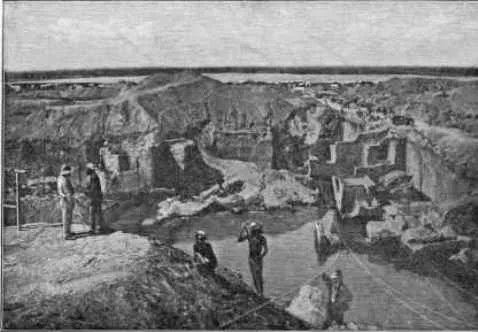
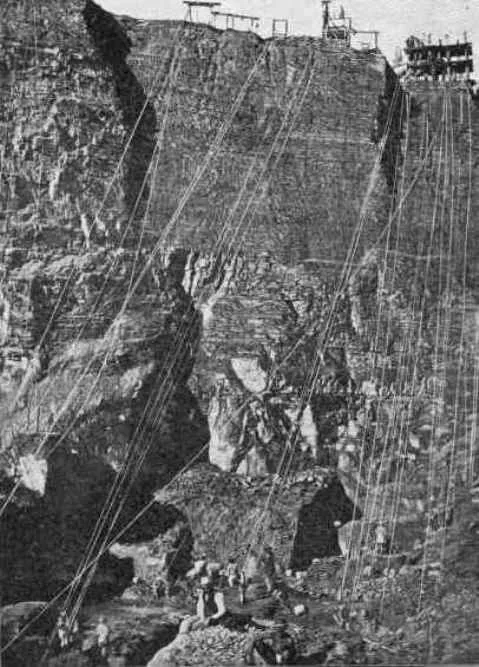
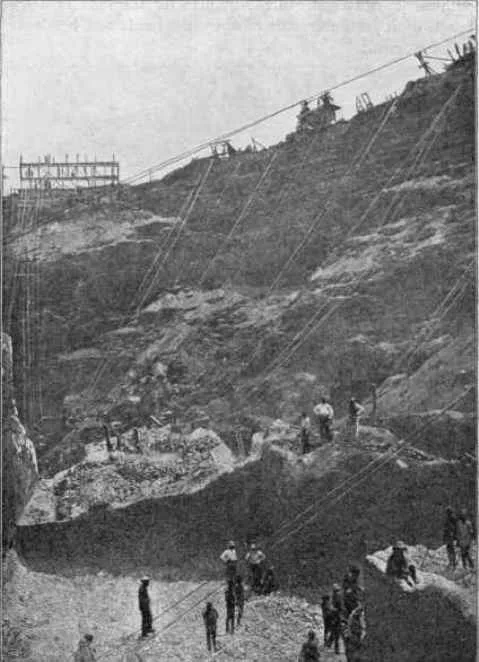
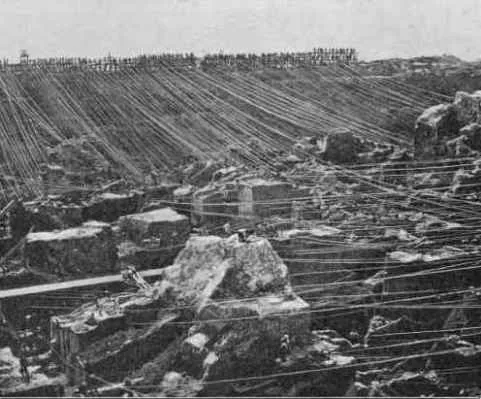
Later renamed Kimberley, the town soon becomes the centre of the world's diamond industry. The Kimberley Mine—today known as the Big Hole—would become the richest diamond mine ever worked by hand.
1873 – Two Future Rivals
Barney Barnato arrives at the Kimberley diggings to join his brother in the diamond trade, while Cecil Rhodes continues purchasing mining claims. The rivalry between these two ambitious young entrepreneurs would shape the future of the diamond industry.
1874 – Barnato Brothers
The firm Barnato Brothers, Dealers in Diamonds and Brokers in Mining Property, opens for business. Within only a few years, Barney Barnato would become one of the wealthiest and most influential figures on the Kimberley diamond fields.
1887 – Rivals Become Giants
By the late 1880s, Cecil Rhodes and Barney Barnato control much of Kimberley's diamond production. Their fierce competition results in overproduction and falling diamond prices, convincing both men that consolidation is essential if the industry is to survive.
1888 – De Beers is Born
On 12 March 1888, De Beers Consolidated Mines Limited (DBCML) is established through the merger of competing mining companies. Cecil Rhodes becomes its founding chairman, creating one of the world's most influential mining companies and establishing a near monopoly over the global diamond trade.
1890 – A New Mine and a New Market
The Wesselton Mine is discovered, further extending Kimberley's diamond wealth.
In the same year, ten leading London diamond merchants form the London Diamond Syndicate, agreeing to purchase De Beers' entire production and helping to stabilise world diamond prices.
1897 – The Death of Barney Barnato
While travelling to England aboard the SS Scot, Barney Barnato dies after falling overboard under circumstances that remain one of South Africa's enduring mysteries. His death marks the end of one of Kimberley's most colourful personalities.
1899 – Kimberley Under Siege
Only weeks after the outbreak of the Second Anglo-Boer War, Kimberley is surrounded by Boer forces. For 124 days the town remains under siege. Mining operations cease while residents endure shelling, rationing and constant uncertainty until the arrival of the relief column in February 1900.
1902 – The End of an Era
Cecil Rhodes dies at Muizenberg at the age of 48. His reported final words — "So little done, too much to do" — reflect the extraordinary ambition that transformed both Kimberley and the world diamond industry.
The same year, a young German-born diamond buyer named Ernest Oppenheimer arrives in Kimberley to begin his career. Although Rhodes and Oppenheimer never met, Oppenheimer would later build upon Rhodes' legacy and become one of the defining figures of twentieth-century diamond mining.
1914 – The End of the Great Kimberley Mine
With the outbreak of the First World War, mining operations at De Beers' Kimberley properties are suspended. The original Kimberley Mine — the Big Hole — never reopens, bringing to a close one of the most extraordinary chapters in mining history.
Legacy
Between 1866 and 1914, diamonds transformed Kimberley from open farmland into one of the world's most famous cities. The discoveries made here changed the global diamond industry, influenced international politics, drove remarkable engineering achievements and created fortunes that continue to shape southern Africa today.
The legacy of those years can still be explored throughout Kimberley—in the Big Hole Mine Museum, historic buildings, monuments and streets where this remarkable story unfolded.
Continue Exploring
History & Heritage
Big Hole & Diamond Mining
Historic Buildings
Famous People
Today in Kimberley's History
The Eureka
Schalk took the stone to a friend, John O'Reilly, who lived at 'Rooikop', some hours away. O'Reilly seldom stayed in one place for long, as he usually travelled about by ox-wagon, trading and hunting, and often shot lions on his trips to the north. Schalk mentioned that he believed the stone to be a diamond due to its hardness and weight.
O'Reilly showed the stone to Jewish storekeepers in Hopetown, who suggested it might be a topaz. At Colesberg, he was about to throw it away when the Acting Civil Commissioner, Lorenzo Boyes, suggested trying it on a pane of glass. They then sent it to Dr W.G. Atherstone of Grahamstown in a plain envelope, one of the few people in the Cape Colony who knew anything about minerals and gems, who identified it as a 21.25-carat, brownish-yellow diamond. Dr Atherstone, in turn, passed it to Mr Southey, the Colonial Secretary. Sir Philip Wodehouse, then Governor of the Cape Colony, thereafter bought it for £1,500. Southey stated: 'This diamond is the rock upon which the future success of South Africa will be built'. The diamond was displayed at the Paris Exposition in 1867 and later cut to its present form, from which it became known as The Eureka Diamond.
This 10.73-carat brilliant is, by ordinary standards, not exceptional. However, it was cut from the first diamond found in South Africa in 1866, and therefore has historical significance.
The Star of South Africa
The Star of South Africa (also known as the Dudley Diamond) stayed in the Wards' possession until 2 May 1974, when it was sold at auction in Geneva for 1.6 million Swiss Francs, equivalent to around £225,300 at the time. The diamond resided in the Natural History Museum in London for a period in the early 2000s and was also part of the "Cartier In America" travelling exhibit in 2009-2010.
The Diamond Rush
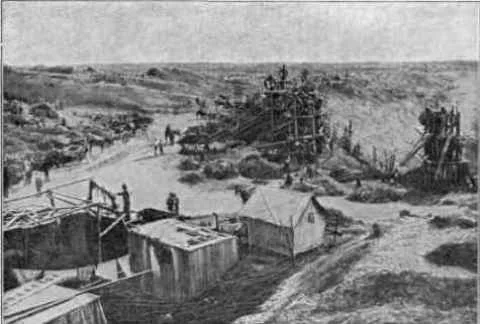
Later that year, in December 1870, children found diamonds while playing next to Du Toit's Pan on their father's farm, Dortsfontein (Dry Fountain). A whole army of diggers stampeded to the place, and the site is now the second colossal hole in the ground of Dutoitspan Mine. Dutoitspan Mine, named such because the farm Dorstfontein originally belonged to Abraham Paulus du Toit, who had built a small house next door to the Pan, a basin shaped like a saucepan that holds water. Du Toit sold the farm to a Mr Geyer for £525 on 12 May 1865, and he, in turn, sold it to Adriaan J. van Wyk for £870 on 6 January 1869.
In May 1871, a new discovery was made on the farm Vooruitzicht (Outlook) that was owned by the brothers Diederick and Nicolaas de Beer (the title deeds to the farm were granted to the De Beers brothers in 1860). This was to become the third colossal hole in the ground of De Beers Mine.
In July 1871, a servant working for a party of diggers from Colesberg who were digging at the Du Toit's Pan, found three diamonds on a small kopje (hillock) known locally as Colesberg Kopje, just a few hundred meters from the earlier find on the farm Vooruitzicht. Colesberg Kopje soon became an indentation and then a crater as a new rush of diggers descended on what was also known as the De Beers Mine (the earlier diggings on the same farm became known for a while as Old De Beers).
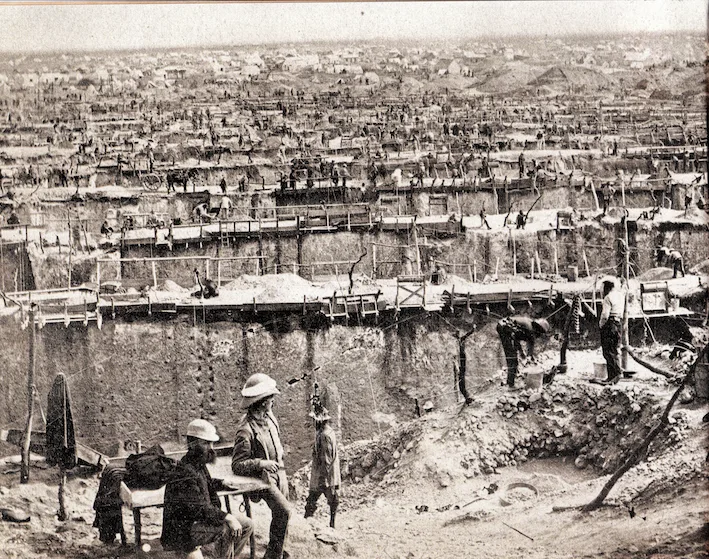
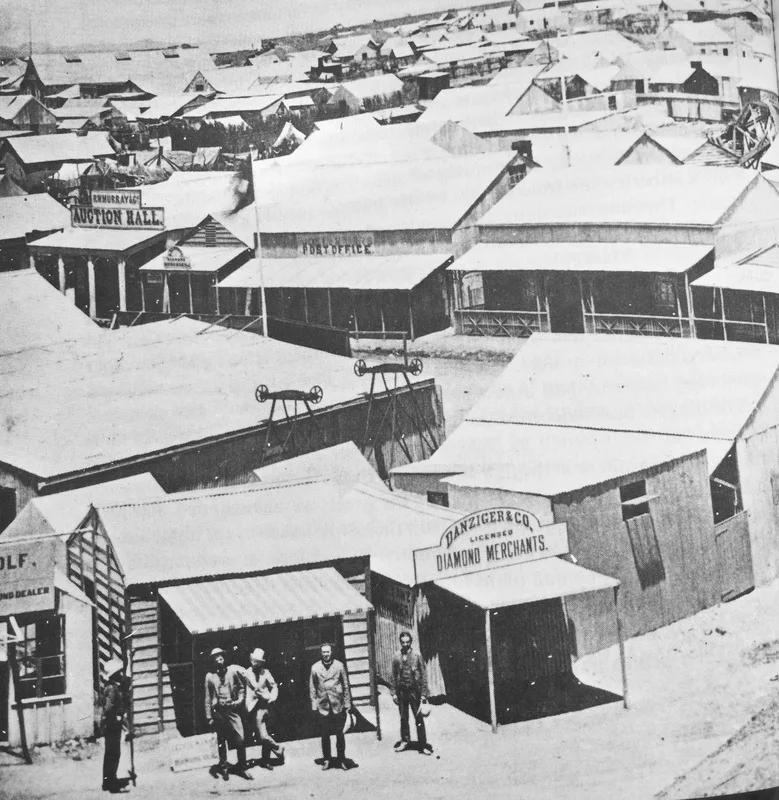
The mining camps around the first three mines were named after their respective mines. With the latest discovery, the camp became known as New Rush, for apparent reasons. Over the ensuing months, the digger camp of New Rush swallowed up the earlier camp of Old De Beers.
With the renaming of New Rush as Kimberley in 1873, the fourth colossal hole in the ground was known as Kimberley Mine. Today, it is known simply as The Big Hole.
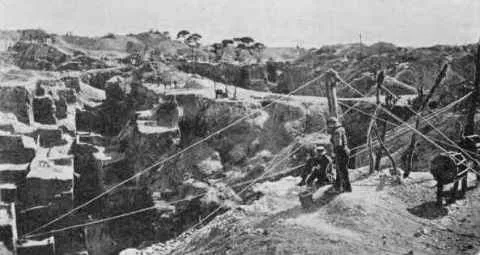
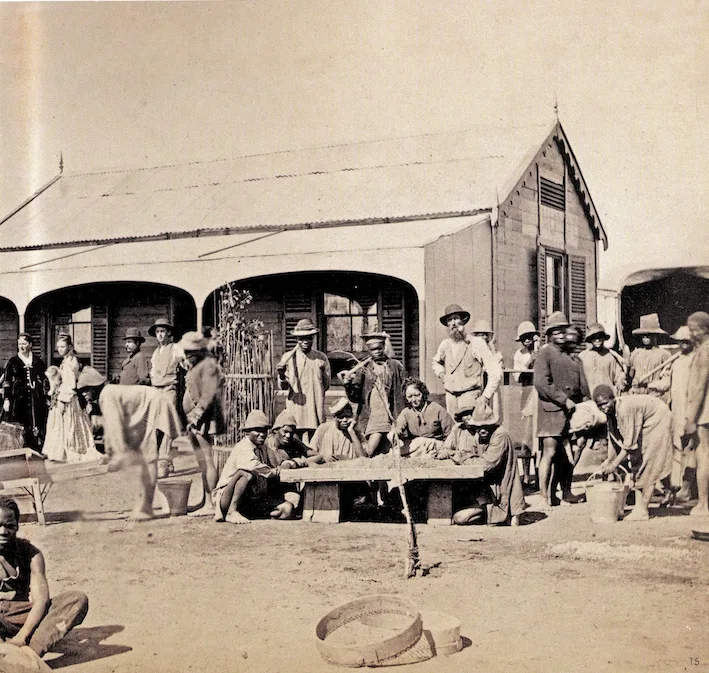
One digger remembered the dry diggings of 1871 in the following manner, “The four great mines [New Rush, Dutoitspan, Bultfontein and Old De Beers] were roughly circular in shape, and claim holders erected their dwellings as close to the mines as possible, and traders, storekeepers and publicans put up their buildings in any vacant spot... thus each mining camp was composed of a central group of workings surrounded by a ring of shacks, shanties, huts and shelters constructed of any material that would keep off the rain or the scorching heat of the sun.”
The satellite township (now named after the BaTlhaping chief, Kgosi Galeshewe) was established in 1871. British Colonial Commissioners arrived in New Rush on 17 November 1871 to exercise authority over the territory on behalf of the Cape Governor. Digger objections and minor riots led to Governor Barkly's visit to New Rush in September 1872, when he proposed instead that Griqualand West be proclaimed a Crown Colony. Richard Southey would arrive as Lieutenant-Governor of the intended Crown Colony in January 1873.
Months passed, however, without any sign of the proclamation or of the promised new constitution and provision for representative government. The delay was in London, where the Secretary of State for the Colonies, Lord Kimberley (John Wodehouse, 1st Earl of Kimberley), insisted that before electoral divisions could be defined, the places had to receive "decent and intelligible names. His Lordship declined to be in any way connected with such a vulgarism as New Rush, and as for the Dutch name, Vooruitzicht… he could neither spell nor pronounce it."
The matter was referred to Southey, who then passed it on to his Colonial Secretary, J.B. Currey. A correspondent at the time wrote, "When it came to renaming New Rush, Currey proved himself a worthy diplomat. He made quite sure that Lord Kimberley would be able both to spell and pronounce the name of the main electoral division by, as he says, calling it 'after His Lordship'."
New Rush became Kimberley by Proclamation on 5 July 1873. Digger sentiment was expressed in an editorial in the Diamond Field newspaper, which stated, "We went to sleep in New Rush and woke up in Kimberley, and so our dream was gone." Kimberley became a municipality in 1877.
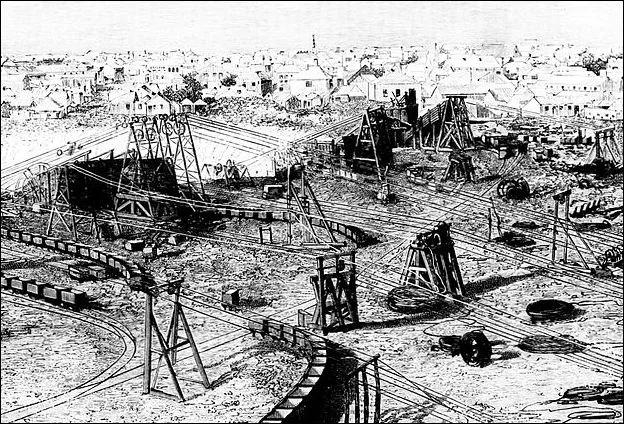
The digger camp of Du Toit’s Pan also swallowed up the earlier camp of Bultfontein. It was subsequently renamed Beaconsfield after the former British Prime Minister, Lord Beaconsfield (Benjamin Disraeli, Earl of Beaconsfield). By 1882, a tramway connected Kimberley to Beaconsfield, and the streets were illuminated by the first electric lights in Southern Africa.
In 1888, an incredible amalgamation occurred between Rhodes' De Beers Mine and Barney Barnato's Kimberley Central Mining Company. The Wesselton Mine, located near the Bultfontein and Dutoitspan Mines, commenced operations in 1890. It was the fifth and last of the colossal Kimberley mines. Also in 1890, Rhodes rose from being the digger's representative for Barkly West in the Cape Legislature to Prime Minister of the Cape Colony.
A lesser-known fact is that the Seventh-day Adventist religious group was founded by Ellen G. White in 1863 in a small, corrugated-iron church located on the corner of Blackstone Avenue and Dyer Place in present-day Battle Creek, Michigan. It was amply financed to the sum of £451,438, paid in 1891 by the De Beers company in exchange for the Wesselton Mine, a property of the Wessels family.
The two towns of Kimberley and Beaconsfield were eventually amalgamated in 1912 to form the City of Kimberley.
Slideshow from the 1870s